Fact-checkers rebut White House claims on childhood vaccine schedule after CDC recommendation changes
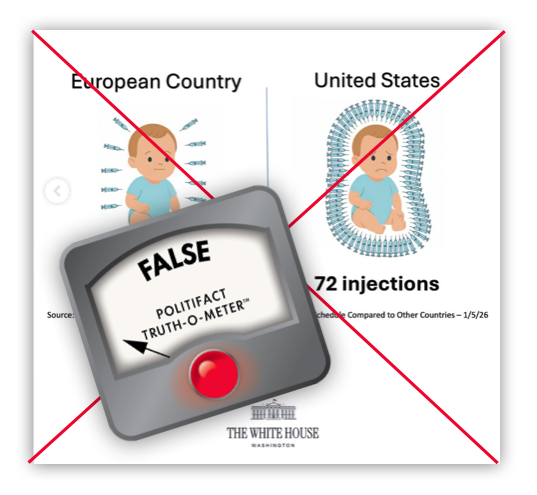
After a major January 5, 2026 shift in CDC childhood vaccine recommendations, a White House social-media graphic and related claims were criticized as misleading, prompting renewed focus on what vaccine guidance is—and is not—in the United States.
What changed and why it drew scrutiny
A debate over U.S. vaccination policy intensified in January after changes were announced to CDC childhood vaccine recommendations. The policy shift quickly became politically charged, and public messaging about the change spread widely online.
In the days after the announcement, the White House amplified claims comparing the number of vaccine doses in the United States to Europe and suggesting dramatic reductions. Fact-checkers and public health experts argued the presentation distorted how vaccine schedules work and how doses and injections are counted, particularly when combination vaccines and oral vaccines are involved.
Recommendations vs. mandates in the U.S.
A central point in the dispute is that CDC schedules are recommendations rather than a federal mandate. In practice, school and daycare vaccination requirements are largely set at the state level, often informed by CDC guidance but subject to exemptions and local rules.
Health organizations warned that confusing the public about what is required versus recommended can undermine trust and reduce uptake, which in turn increases the risk of outbreaks of preventable diseases. Pediatric groups indicated they intend to continue emphasizing evidence-based vaccination guidance and clinical best practices.
What to watch next
The practical impact of any change in CDC recommendations may vary across states and healthcare systems. Some providers may continue to follow alternative professional guidance, while policymakers may seek to revise requirements, expand exemptions, or tighten them depending on the political direction in each state.
The immediate public health question is whether changes in messaging and policy will measurably alter vaccination rates. The long-term issue is whether the U.S. can maintain consistent immunization coverage amid polarized information environments and shifting institutional guidance.
In vaccine policy debates, the details matter: what counts as a dose, how many injections occur, and which level of government actually sets requirements.
- Issue: Misleading claims about vaccine counts and comparisons to Europe
- Context: CDC recommendation changes announced January 5, 2026
- Key distinction: CDC guidance vs. state-level school/daycare mandates