Shutdown risk rises as Senate Democrats threaten to block DHS funding after Minneapolis shooting
Senate Democrats say they are prepared to block a government funding package if it includes Homeland Security money, raising the risk of a partial shutdown as the Jan. 31 deadline approaches and immigration enforcement becomes the political fault line.
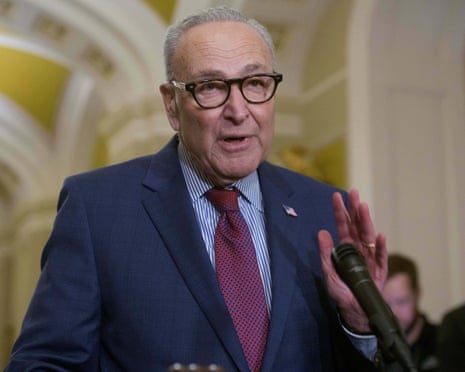
Senate Democrats are vowing to block Department of Homeland Security funding in the next government spending package, a move that could trigger a partial shutdown after January 31, 2026, if lawmakers fail to reach a new agreement. The threat intensified after the Minneapolis shooting involving a federal officer, with Democrats arguing that the DHS spending bill lacks sufficient constraints and oversight for immigration enforcement. ([wsj.com](https://www.wsj.com/politics/policy/senate-democrats-vow-to-block-dhs-funding-risking-another-shutdown-54759b51?utm_source=openai))
The funding fight matters because the Senate’s procedural math still requires a supermajority to advance major spending measures. Even with Republicans holding a 53–47 majority, Democrats’ resistance can prevent the 60 votes needed to move the package forward, forcing leaders either to renegotiate, separate the DHS portion, or face a shutdown scenario that disrupts agencies tied to security, border operations and other federal services. ([wsj.com](https://www.wsj.com/politics/policy/senate-democrats-vow-to-block-dhs-funding-risking-another-shutdown-54759b51?utm_source=openai))
The dispute is not only about topline numbers; it is also about conditions. Democrats have pushed for stricter guardrails on enforcement tactics and stronger accountability mechanisms, contending that recent events demonstrate systemic risks. Republicans have argued that withholding DHS funding would undermine national security and operational readiness, and they have been resistant to stripping the department from a broader appropriations deal.
For businesses and markets, the renewed shutdown risk is a familiar hazard: short-term disruptions to federal contracting and permitting, delayed economic data releases in some scenarios, uncertainty for travel and security operations, and an additional layer of volatility during an already busy period that includes central bank decision-making and major corporate earnings reports.
In prior standoffs, congressional leaders often found a path through temporary extensions, narrow carve-outs, or last-minute procedural agreements. But the political mood appears harder this time, with Democrats framing the Minneapolis shooting as evidence that incremental changes are no longer enough and with Republicans under pressure to show unity behind the administration’s enforcement posture.
As the deadline nears, multiple outcomes remain plausible: a revised package that excludes DHS for separate debate, a short-term continuing resolution, or a breakdown that leads to a partial lapse in funding. Each scenario carries its own operational costs, but the immediate economic signal is the same—policy uncertainty at a moment when weather disruptions are already straining logistics in many regions.