U.S. business activity holds steady in January as firms cite tariff-driven costs, survey shows
A closely watched private-sector survey found January activity remained in expansion territory, supported by improved new orders but restrained by labor-market softness and ongoing cost worries. The report suggests growth is continuing but moderating at the start of 2026.
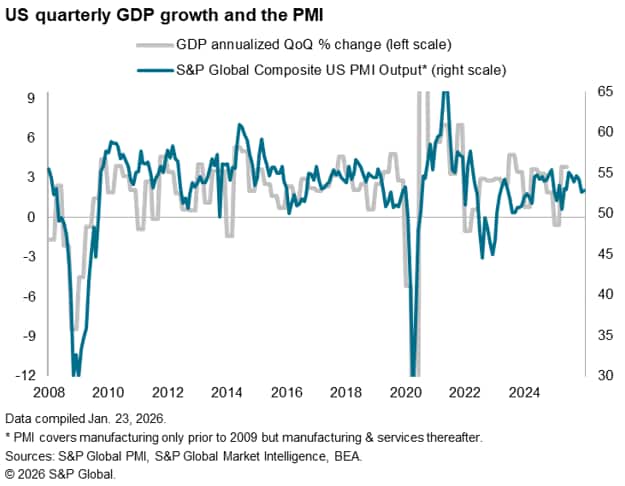
U.S. business activity remained steady in January, according to a new survey, as gains in new orders were balanced by signs of labor-market softness and persistent worries about higher input costs. The data indicate the private sector is still expanding at the start of 2026, but at a pace consistent with moderation rather than acceleration.
The report showed output continuing above the key 50-point threshold that separates growth from contraction, suggesting the economy is not stalling even as companies navigate uncertainty. Survey respondents pointed to improving demand in some areas, but also described hesitancy tied to pricing pressures and the unpredictability of cost structures—especially for firms exposed to imports.
Cost concerns were a central theme. Businesses cited elevated expenses linked to supply chains and tariffs, with some companies reporting that they were still working through how much of those costs could be passed along to customers without dampening demand. For consumer-facing sectors, the ability to raise prices remains sensitive after multiple years of inflation fatigue, even though overall inflation has cooled from its 2022 highs.
Employment signals were more mixed. While some companies added staff, the survey described a labor market that is not as tight as it once was, with certain firms delaying hiring or relying on productivity improvements rather than headcount growth. That dynamic can support margins in the short term but may also reflect caution about future demand.
For policymakers, steady-but-moderating growth combined with persistent price pressures can complicate the picture. If demand remains resilient, businesses may retain more pricing power, slowing the return to the Federal Reserve’s inflation target. At the same time, if labor-market conditions weaken further, the risk of a sharper slowdown rises.
Taken together, the survey suggests an economy entering 2026 with underlying momentum but meaningful crosscurrents: demand improving in pockets, hiring less robust, and inflation risks lingering through costs that firms say remain elevated. Investors and decision-makers will likely look to upcoming data releases to confirm whether the balance is tipping toward renewed strength or a more pronounced cooling trend.